
Round 3
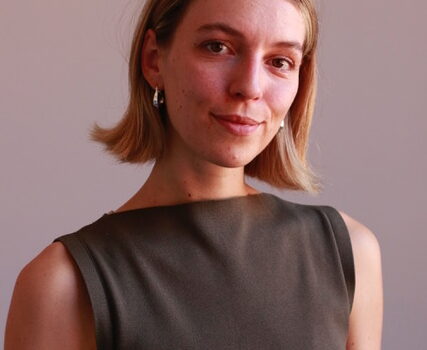
Nanna Kiil Johansen
Nationality
Danish
Career-level
Early-Career
Host institution
Norwegian Research Centre (NORCE) and the Bjerknes Centre for Climate Research
Norway
Residency project
Tracing the Arctic’s Past to Forecast Our Future
In Bergen, I will be working with scientists of the frontier research project “I2B – Into the Blue” (Tracing the Arctic’s Past to Forecast Our Future), an international collaboration between NORCE, the University of Tromsø, and the Alfred Wegener Institute. The project explores what may happen as Arctic ice continues to melt and the ocean turns fully blue and ice-free. By studying past ice-ocean-ecosystem dynamics from periods when Earth was significantly warmer than today, researchers hope to gain insight into what our warming future may hold.
Testimony
I’m Nanna Christ Kiil Johansen, and I work in journalism and creative production. First and foremost, I am passionate about portraying people who are deeply committed to what they do. Alongside this, I am strongly motivated by climate issues and by gaining a deeper understanding of both the challenges we face and the people who actively work to address them. This is why I am grateful to have the opportunity, through this grant, to combine these two motivations during a three-month residency at NORCE and the Bjerknes Centre for Climate Research in Bergen, Norway, a global hub of climate research.
In Bergen, I will be working with scientists of the frontier research project “I2B – Into the Blue”, an international, cross-disciplinary collaboration between NORCE, the University of Tromsø (UiT), and the Alfred Wegener Institute, Helmholtz Centre for Polar and Marine Research (AWI). To humbly express the core of the project, I2B explores what may happen as Arctic ice continues to melt and the ocean, so to speak, turns fully blue and ice-free. Entering a warmer climate at present has led the researchers to study past ice-ocean-ecosystem dynamics from periods when Earth was significantly warmer than it is today. By understanding these past climate states, researchers can hopefully gain insight into what the future may hold.
The FRONTIERS residency program was brought to my attention by my former professor of journalism, Dr. Tong-Jin Smith, who knows me well. I was immediately thinking what a great opportunity it would be to have the space and time to research a topic thoroughly, while engaging directly with a scientific community working at the frontier of research. To find a fitting scientific project for this purpose, I had a couple of simple touchpoints – climate research, expedition-based research, and Norway. Finding the I2B project, I feel like I discovered a project where researchers are passionate about an important, urgent issue, and I find it inspiring that so many people from different disciplines and institutions collaborate for the higher goal of understanding climate issues. I2B’s team at NORCE in Bergen was welcoming from the very first email. After a couple of online meetings, the research institution was happy to share that they would host me for three months.
I expect to immerse myself in, what is yet to me, a quite unknown world of frontier science. Journalism often leaves little room for the time and depth required to really engage with a topic, so being able to have this opportunity in this early stage of my career is something that I am very grateful for.