Round 3
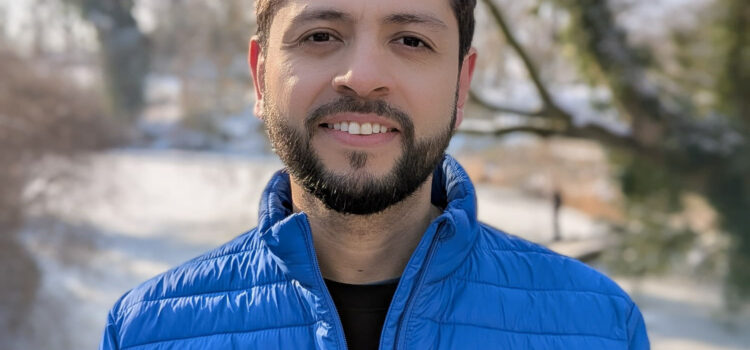
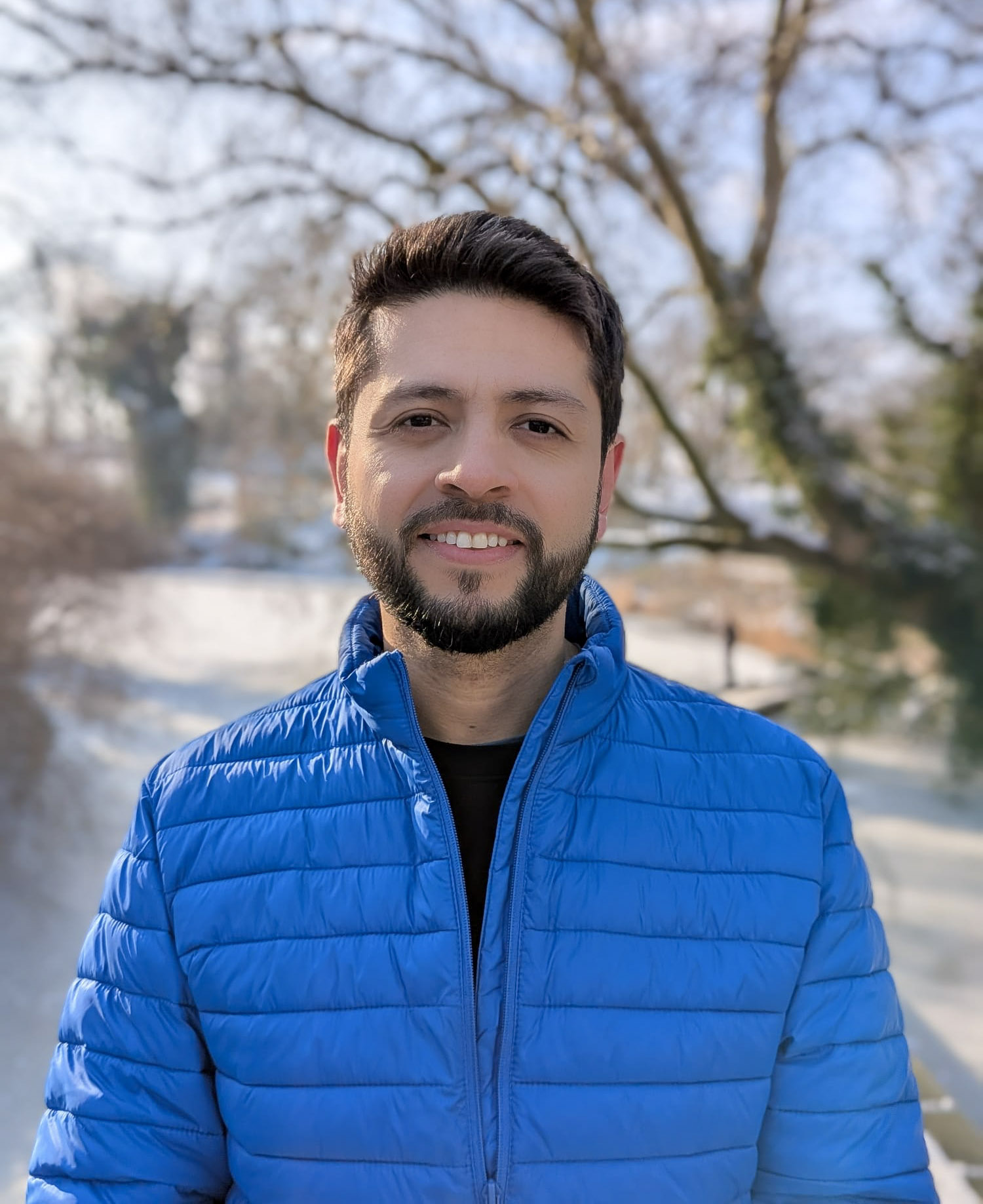
Juan Escorcia
Nationality
Colombian
Career-level
Early-Career
Host institution
MARUM (University of Bremen)
Germany
Residency project
Unravelling the Ocean Carbon Cycle
My project will explore how carbon is transported and stored in the deep ocean over a four-month stay with MARUM scientists. I will investigate key questions: How is carbon moved and retained in the ocean depths? What roles do marine particles and seafloor systems play in carbon flows? And how are new tools—such as subsea drilling, sensors, and ocean simulations—reshaping our understanding of the ocean as a climate actor?
Testimony
In 2022, I produced a podcast report on the soundscapes of the Spanish Mediterranean Sea. My report was to identify the natural sounds of this sea and how they mix with noise pollution, mainly from maritime traffic. Scientists explained to me that the spectrum of their underwater recordings is still limited. The vastness of the oceans remains an unexplored frontier, however, they described what is known about the seafloor and the impact of the climate crisis on these ecosystems.
In the following years, I continued writing about the oceans, always with the seafloor in mind. As uncertainty about these areas persisted, I began a side research project while publishing on other topics related to the Mediterranean’s transformation. During this work, I found an online video showing strange marine creatures and air bubbles rising from what looked like corals, a marine ecosystem I had rarely seen. A German voice explained a scientific study behind the footage. That was how I first learned about MARUM at the University of Bremen.
Some time later, I found a call for applications to the FRONTIERS science journalism residency on social media from Pompeu Fabra University in Barcelona. Among the European organizations involved, I saw MARUM listed. I knew then that I should contact them and request a letter of support. With a clearer idea of my journalistic investigation, I reached out to Ulrike Prange from MARUM’s science communication group, and Dr. Mathias Zabel, an expert in inorganic aquatic geochemistry, joined our call. They followed my project closely and advised me on how to strengthen it from a FRONTIERS research perspective.
A few days later, I received their letter of support and submitted my application. In November 2024, FRONTIERS informed me that my proposal had not been selected. However, the feedback they provided was invaluable to reshape the project. I stayed in contact with Ulrike and Dr. Zabel, who continued supporting the revised version. Ulrike encouraged me to apply again in 2025, and in October of that year, I received an acceptance email from the FRONTIERS team.
Residency outputs
Geóloga bogotana ayuda a revelar agua dulce oculta en las profundidades del océano
(Geologist Helps Uncover Hidden Freshwater in the Depths of the Ocean)
El Tiempo
23 March 2026