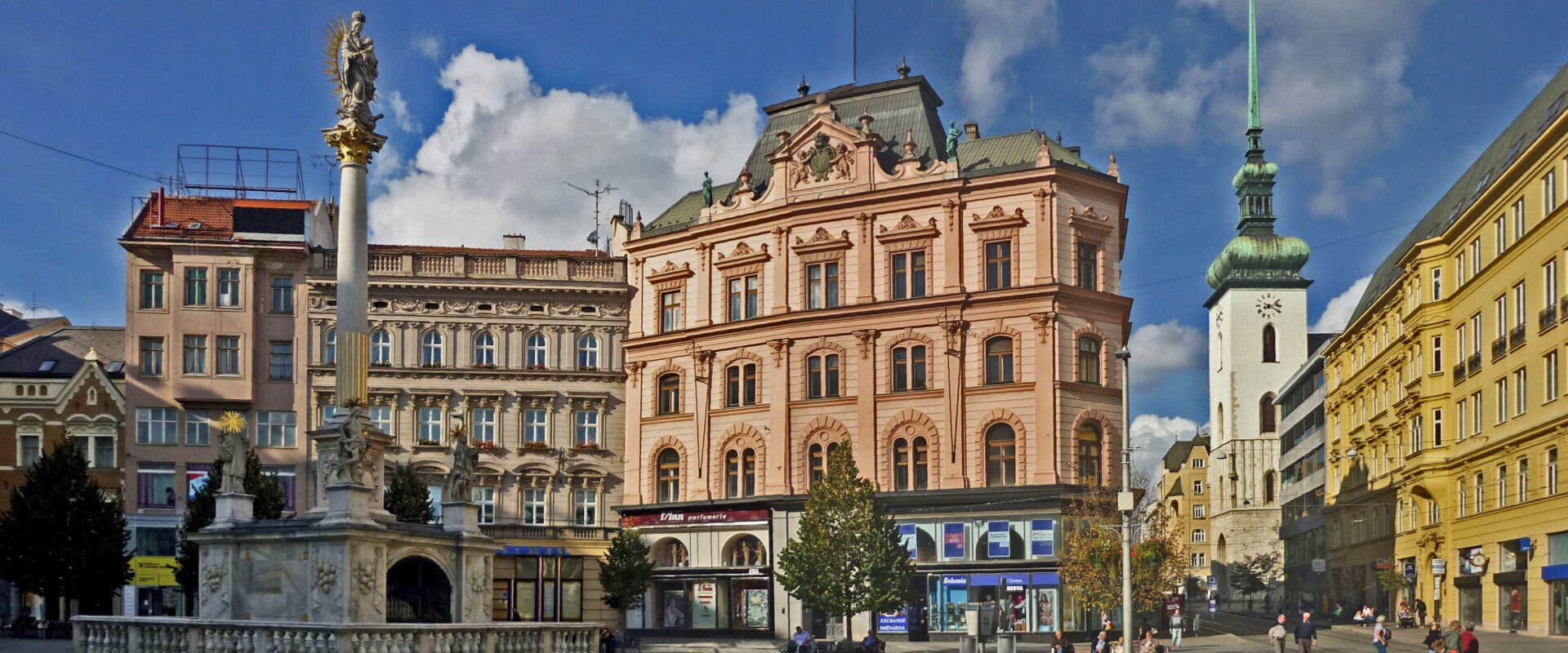
Brno, Czech Republic
Journalists and scientists are forged in different fields of knowledge and trained in different schools, but both believe in the relevance of truth and the utmost importance of facts. In an increasingly complex world, strong journalism is needed more than ever while preserving trustworthiness. We believe science can help make journalism stronger. And vice versa. But both professions need to preserve their own identity and independence.
The relationship between journalists and scientists has not always been easy and perhaps it will never be. There are challenges related to different practices, norms and values that can impact their work together. But science and journalism are already collaborating within and beyond science journalism.
In this pre-conference, we want to explore different formats of the relationship between scientists and journalists, starting from the discussion of ongoing projects. Kick-starting with the experience of the organizers and a selection of invited speakers, we want to challenge the audience to give us their views on the present and future of the journalists-scientists relationship.
In some projects, scientists are sources for the journalist’s work; in others, journalists are intermediaries between scientists and the public. The FRONTIERS science journalism initiative creates conditions for scientists to host journalists in their institutions, learning about science concepts, practices and values; the expectation being that scientists learn as well and that this mutual learning leads to better stories in the present and better relationships in the future. More recently, the Journalism Science Alliance explores the idea of journalists and scientists working side by side to explore facts in investigative journalism projects, aiming at deeper and more meaningful partnerships. Both projects are funded by the European Union.
What benefits exist for each of these approaches? How does each one benefit science or journalism, or society? And what constraints exist in each approach? Do all approaches ensure transparency, ethical work, and social value? Are there limits to a collaboration between scientists and journalists? Who draws them?
Session and speakers
This in-person event will tackle these questions in one round table discussion with invited speakers:
- António Granado, Journalism Science Alliance coordinator and FRONTIERS member
- Vera Peneda, Director of Programmes & Impact at European Journalism Centre (EJC) and Journalism Science Alliance member
- Daniela Ovadia, Scientific Director of Center for Ethics in Science and Journalism (CESJ) and FRONTIERS member
- Blanka Nyklová (Institute of Sociology, Czech Academy of Sciences), Journalism Science Alliance grantee
- Zuzana Vitková (Journalist at Denník N), FRONTIERS grantee
- Ana Sanchez, moderator, Journalism Science Alliance co-coordinator and FRONTIERS member
Each speaker will present their view, and the moderator will guide the discussion, inviting participants to challenge the speakers and contribute with their own view.
Register here: https://forms.gle/vw1uP1eezpJxKmQh7